
Picture

Northwestern Medicine
​Breakthroughs for Physicians

​​
  • Home
  • Specialties
    • Cardiovascular >
      • Research
      • Clinical Breakthroughs
      • News
    • Endocrinology >
      • Clinical Breakthroughs In Endocrinology
      • Research In Endocrinology
      • News
    • ENT (Otolaryngology) >
      • Clinical Breakthroughs
      • Research
      • News
    • Gastroenterology >
      • Clinical Breakthroughs
      • Research
      • News
    • Geriatrics >
      • Clinical Breakthroughs
      • Research
      • News
    • Neurosciences >
      • Rare and Complex Brain Tumors
      • Research
      • COVID-19 and Neurosciences
      • News
      • Clinical Breakthroughs
    • OB-GYN >
      • Clinical Breakthroughs
      • Research
      • News
    • Oncology >
      • Clinical Breakthroughs
      • Research
      • News
    • Ophthalmology >
      • Clinical Breakthroughs
      • Research
      • News
    • Organ Transplant >
      • Clinical Breakthroughs
      • Research
      • News
    • Orthopaedics >
      • Clinical Breakthroughs
      • Research
      • News
    • Psychiatry >
      • Clinical Breakthroughs
      • Research
      • News
    • Pulmonary >
      • Clinical Breakthroughs
      • Research
      • News
    • Rehabilitation >
      • Clinical Breakthroughs
      • News
    • Rheumatology >
      • Clinical Breakthroughs
      • Research
      • News
    • Urology >
      • Clinical Breakthroughs
      • Research
      • News
  • CME
  • REFERRALS
    • Refer to NM Cardiovascular
    • Refer to NM Neurosciences
    • Refer to Other Specialties

< BACK TO RESEARCH IN NEUROSCIENCES

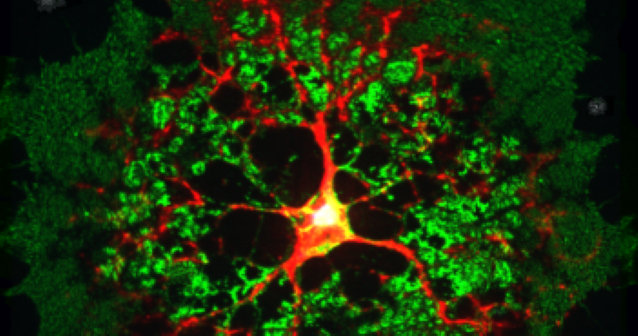
Neuron Illustration

January 2020

NEUROSCIENCES

UNWRAPPING OLIGODENDROCYTE DEVELOPMENT

Featuring: Brian Popko, PhD and Huan Xu, MD
​
​​Specialized nervous system cells called oligodendrocytes are heavily influenced by a relatively small epigenetic mechanism, according to a new study published in Neuron. Defects in this RNA methylation mechanism could impact motor learning or neurodegenerative diseases like multiple sclerosis, making these findings an important first step in teasing out downstream effects, according to Brian Popko, PhD, professor in the Ken and Ruth Davee Department of Neurology and lead author of the study.
​

“This is a particularly exciting area because this dynamic methylation has the capacity to influence the cell functions in a big, rapid way,” Popko said.

The brain has nearly 86 million individual neurons and many more glial cells, including oligodendrocytes, which are the cells that generate myelin, an insulating sheath that surrounds axons to allow rapid transportation of electrical impulses.

Myelin performs a dual role, both increasing transmission speed and providing nutrients to the axon. It’s not a one-time operation, either; oligodendrocytes remain attached to the myelin in order to properly maintain the myelin sheath, which has the potential to last a lifetime.

“It’s like an organelle of the myelinating cell,” Popko said.

Oligodendrocyte development is relatively well-studied compared to other cell types in the central nervous system, owing to their ease of isolation in a laboratory environment. But the role of RNA methylation is still relatively unknown, according to Popko. In the current study, Popko and his collaborators generated mice that were missing Mettl14, a protein component that is essential for RNA modification.

“Our mutant mice start to show the phenotype around six months” said Huan Xu, MD, a doctoral student in the Popko laboratory and first author of the study. “The neurological phenotypes further lead us to look at the pathology and explore the mechanisms.”
Analysis revealed that the mice without Mettl14 displayed abnormal gene expression in oligodendrocytes.

“If a transcript is non-methylated, various levels of gene expression could be altered, including RNA stability, translation, transportation and splicing,” Popko said.
The outsize impact of Mettl14 demonstrates the previously-unknown importance of proper RNA methylation in oligodendrocyte development, and raises questions about RNA methylation’s role in diseases and processes involving myelin.

For example, learning how to perform physical activities — such as riding a bike or playing piano — requires formation of new myelin in certain brain pathways. RNA methylation could play a critical role in the formation of new oligodendrocytes, according to Xu.

In diseases like multiple sclerosis, de-myelination is a major cause of symptoms such as fatigue, numbness and abnormal gait. While patients have some ability to re-myelinate, that ability diminishes over time.

“What changes in the oligodendrocyte cells that makes them less capable of remyelinating?” Dr.Popko said. “One possibility is that changes in RNA methylation contribute to that.”

This work was supported by the National Institutes of Health grants R01NS109372 and R35NS097370, the National Multiple Sclerosis Society grant PP-1603-08106 and the Dr. Miriam and Sheldon G. Adelson Medical Research Foundation.

This article was originally published in the Feinberg School of Medicine News Center on January 28, 2020. 
Brian Popko PhD Headshot
Brian Popko, PhD, professor in the Ken and Ruth Davee Department of Neurology, was the lead author of a study published in the journal Neuron.

Doctor Huan Xu headshot
Huan Xu, MD, a doctoral student in the Popko laboratory and first author of the study.

Refer a Patient

Northwestern Medicine welcomes the opportunity to partner with you in caring for your patients. ​
Call 844.344.6663
Find an NM Neurologist
Find an NM Neurosurgeon
Find an NM Neuroradiologist

You May Also Like

physicians and nurses in OR

January 2021

NEUROSCIENCES
Wellness Curriculum May Help Decrease Residency Burnout
 Les Turner Symposium building

November 2020

NEUROSCIENCES
Les Turner Symposium Celebrates Scientific Discovery in ALS
Igor Koralnik, MD headshot with mask

November 2020

NEUROSCIENCES
Examining the Frequent Neurologic Manifestations and Encephalopathy-Associated Morbidity in COVID-19 Patients

Northwestern Medicine Breakthroughs for Physicians

About Us     Terms of Use     Privacy Policy     How to Vote for U.S. News & World Report Best Hospitals
© 2025 Northwestern Medicine® and Northwestern Memorial HealthCare. 
Northwestern Medicine® is a trademark of Northwestern Memorial HealthCare, used by Northwestern University
Connect with us
[email protected]
International physicians, contact [email protected]
  • Home
  • Specialties
    • Cardiovascular >
      • Research
      • Clinical Breakthroughs
      • News
    • Endocrinology >
      • Clinical Breakthroughs In Endocrinology
      • Research In Endocrinology
      • News
    • ENT (Otolaryngology) >
      • Clinical Breakthroughs
      • Research
      • News
    • Gastroenterology >
      • Clinical Breakthroughs
      • Research
      • News
    • Geriatrics >
      • Clinical Breakthroughs
      • Research
      • News
    • Neurosciences >
      • Rare and Complex Brain Tumors
      • Research
      • COVID-19 and Neurosciences
      • News
      • Clinical Breakthroughs
    • OB-GYN >
      • Clinical Breakthroughs
      • Research
      • News
    • Oncology >
      • Clinical Breakthroughs
      • Research
      • News
    • Ophthalmology >
      • Clinical Breakthroughs
      • Research
      • News
    • Organ Transplant >
      • Clinical Breakthroughs
      • Research
      • News
    • Orthopaedics >
      • Clinical Breakthroughs
      • Research
      • News
    • Psychiatry >
      • Clinical Breakthroughs
      • Research
      • News
    • Pulmonary >
      • Clinical Breakthroughs
      • Research
      • News
    • Rehabilitation >
      • Clinical Breakthroughs
      • News
    • Rheumatology >
      • Clinical Breakthroughs
      • Research
      • News
    • Urology >
      • Clinical Breakthroughs
      • Research
      • News
  • CME
  • REFERRALS
    • Refer to NM Cardiovascular
    • Refer to NM Neurosciences
    • Refer to Other Specialties