Picture

Northwestern Medicine
​Breakthroughs for Physicians

​​
  • Home
  • Specialties
    • Cardiovascular >
      • Research
      • Clinical Breakthroughs
      • News
    • Endocrinology >
      • Clinical Breakthroughs In Endocrinology
      • Research In Endocrinology
      • News
    • ENT (Otolaryngology) >
      • Clinical Breakthroughs
      • Research
      • News
    • Gastroenterology >
      • Clinical Breakthroughs
      • Research
      • News
    • Geriatrics >
      • Clinical Breakthroughs
      • Research
      • News
    • Neurosciences >
      • Rare and Complex Brain Tumors
      • Research
      • COVID-19 and Neurosciences
      • News
      • Clinical Breakthroughs
    • OB-GYN >
      • Clinical Breakthroughs
      • Research
      • News
    • Oncology >
      • Clinical Breakthroughs
      • Research
      • News
    • Ophthalmology >
      • Clinical Breakthroughs
      • Research
      • News
    • Organ Transplant >
      • Clinical Breakthroughs
      • Research
      • News
    • Orthopaedics >
      • Clinical Breakthroughs
      • Research
      • News
    • Psychiatry >
      • Clinical Breakthroughs
      • Research
      • News
    • Pulmonary >
      • Clinical Breakthroughs
      • Research
      • News
    • Rehabilitation >
      • Clinical Breakthroughs
      • News
    • Rheumatology >
      • Clinical Breakthroughs
      • Research
      • News
    • Urology >
      • Clinical Breakthroughs
      • Research
      • News
  • CME
  • REFERRALS
    • Refer to NM Cardiovascular
    • Refer to NM Neurosciences
    • Refer to Other Specialties

< BACK TO CLINICAL BREAKTHROUGHS IN ONCOLOGY

February 2024

ONCOLOGY

RETHINKING THE BURDEN OF CANCER TREATMENTS’ SIDE EFFECTS

Featuring:  John Peipert, PhD

​Even mild and moderate side effects can contribute to patients with cancer discontinuing their treatment, according to an analysis recently published in the Journal of Clinical Oncology.

For many people receiving cancer treatment, side effects like nausea and hair loss are not only bothersome, but can lead to them pausing or discontinuing their treatment altogether, said John Peipert, PhD, assistant professor of Medical Social Sciences in the Division of Outcome and Measurement Science, who was a co-author of the study.

​Currently, side effects are graded according to the Common Terminology Criteria for Adverse Events (CTCAE), which grades side effects based on clinical observation, as opposed to patient-reported perspectives.

“We realized that even though they’re lower grade, these adverse events may be quite bothersome and burdensome to patients and affect how patients tolerate the treatment. So, we examined that in this paper,” Peipert said.

In the study, investigators analyzed data from a previous cancer trial which asked participants to rate how bothered they were by mild and moderate side effects resulting from their treatment. Each low- and moderate-grade side effect increased the likelihood of a patient reporting being bothered by side effects by 13 and 35 percent, respectively. Moderate side effects increased the likelihood of the patient discontinuing treatment by 59 percent, according to the study.

The findings provide important information about how side effects from cancer treatment affect patients, a topic that is not often studied, Peipert said.

​“Some clinical trials may not collect grade one or two adverse events, and this evidence suggests that we need to be very careful before moving in that direction because we may be missing out on adverse events that tell us about whether or not the patient can tolerate the new treatment, which of course is critical for understanding treatment benefit versus risk,” Peipert said.

Moving forward, Peipert said he hopes to see investigators explore ways to record patient-reported side effect burden and incorporate that data into future trials for new cancer treatments.

“I think we need to move toward a solution about what is the best and most patient-centered way to capture tolerability of cancer treatments,” said Peipert, who is also a member of the Robert H. Lurie Comprehensive Cancer Center of Northwestern University. “We need to make sure that whatever way we record it gets at what the patient feels is tolerable versus a clinician’s perspective about that.”

Additional co-authors of the study included David Cella, PhD, professor of Medical Social Sciences and associate director of Cancer Prevention and Control at Lurie Cancer Center.

The study was supported by National Cancer Institute grant U01 CA233169.
​This article was originally published in the Feinberg School of Medicine News Center on February 16, 2024. ​
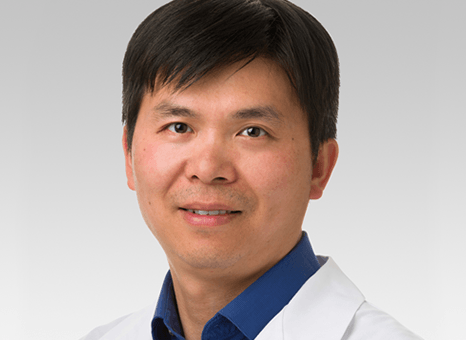
John Peipert, PhD headshot
John Peipert, PhD, assistant professor of Medical Social Sciences in the Division of Outcome and Measurement Science, was a co-author of the study published in the Journal of Clinical Oncology. 

Refer a Patient

Northwestern Medicine welcomes the opportunity to partner with you in caring for your patients. 
Call 844.344.6663
Find an NM oncologist

You May Also Like

brain scan images

December 2022

ONCOLOGY
Bin Zhang, MD, PHD, Named Co-leader Of Tumor Environment And Metastasis Program
Two physicians reviewing brain scan

September 2022

ONCOLOGY
NIH Initiative To Systematically Investigate And Establish Function Of Every Human Gene
Headshot of Yara Mikhaeil-Demo, MD

October 2022

ONCOLOGY
Newly Identified Protein Drives Breast Cancer Stemness And Metastasis

Northwestern Medicine Breakthroughs for Physicians

About Us     Terms of Use     Privacy Policy     How to Vote for U.S. News & World Report Best Hospitals
© 2025 Northwestern Medicine® and Northwestern Memorial HealthCare. 
Northwestern Medicine® is a trademark of Northwestern Memorial HealthCare, used by Northwestern University
Connect with us
[email protected]
International physicians, contact [email protected]
  • Home
  • Specialties
    • Cardiovascular >
      • Research
      • Clinical Breakthroughs
      • News
    • Endocrinology >
      • Clinical Breakthroughs In Endocrinology
      • Research In Endocrinology
      • News
    • ENT (Otolaryngology) >
      • Clinical Breakthroughs
      • Research
      • News
    • Gastroenterology >
      • Clinical Breakthroughs
      • Research
      • News
    • Geriatrics >
      • Clinical Breakthroughs
      • Research
      • News
    • Neurosciences >
      • Rare and Complex Brain Tumors
      • Research
      • COVID-19 and Neurosciences
      • News
      • Clinical Breakthroughs
    • OB-GYN >
      • Clinical Breakthroughs
      • Research
      • News
    • Oncology >
      • Clinical Breakthroughs
      • Research
      • News
    • Ophthalmology >
      • Clinical Breakthroughs
      • Research
      • News
    • Organ Transplant >
      • Clinical Breakthroughs
      • Research
      • News
    • Orthopaedics >
      • Clinical Breakthroughs
      • Research
      • News
    • Psychiatry >
      • Clinical Breakthroughs
      • Research
      • News
    • Pulmonary >
      • Clinical Breakthroughs
      • Research
      • News
    • Rehabilitation >
      • Clinical Breakthroughs
      • News
    • Rheumatology >
      • Clinical Breakthroughs
      • Research
      • News
    • Urology >
      • Clinical Breakthroughs
      • Research
      • News
  • CME
  • REFERRALS
    • Refer to NM Cardiovascular
    • Refer to NM Neurosciences
    • Refer to Other Specialties