

|
May 2022 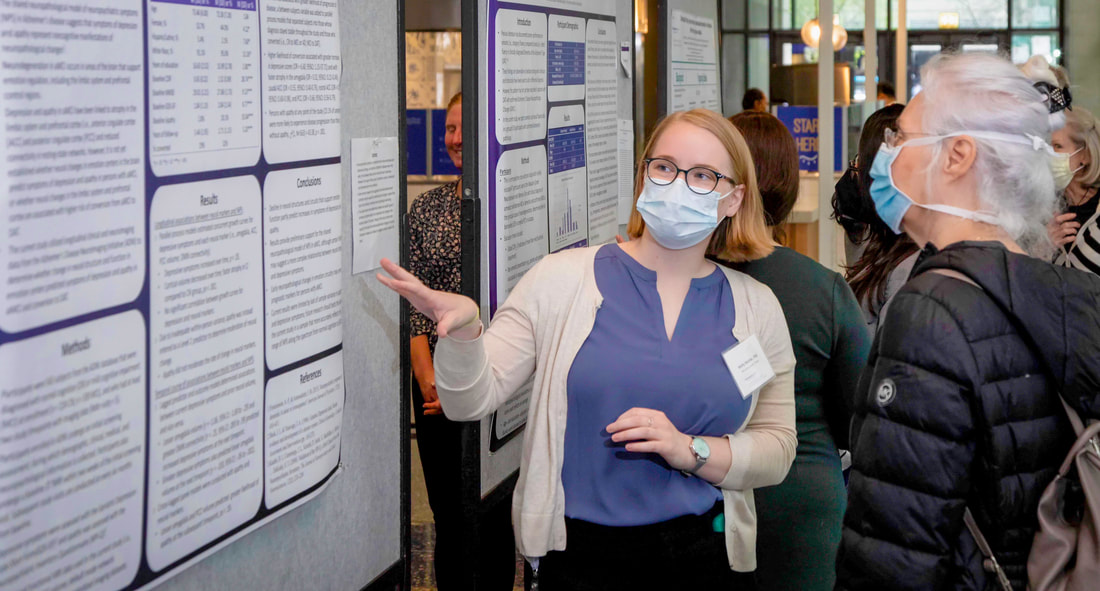
CELEBRATING ALZHEIMER’S SCIENCE AND CLINICAL CAREThe Mesulam Center for Cognitive Neurology and Alzheimer’s Disease held the 28th annual Alzheimer Day on May 5, returning to campus for the first time in three years.
M. Marsel Mesulam, MD, chief of Behavioral Neurology, the Ruth Dunbar Davee Professor of Neuroscience and director of the Mesulam Center, welcomed attendees to the event, highlighted the recent renewals of several large grants supporting the center and thanked research participants and their families — noting that without them, no center activities would be possible. 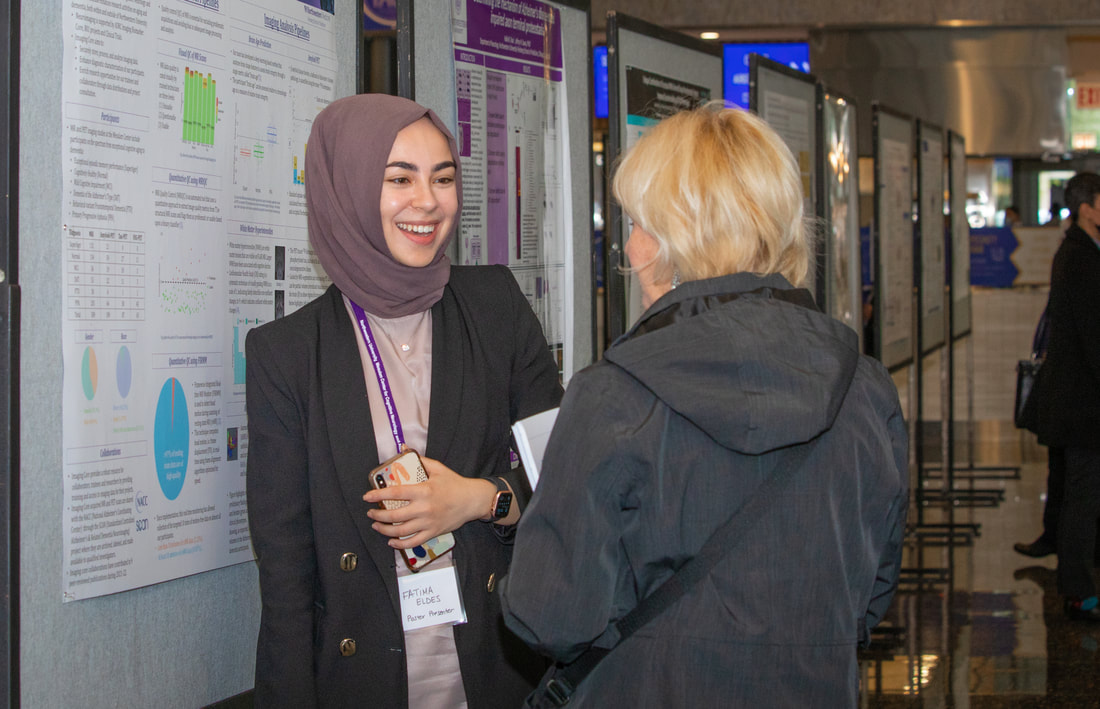
M. Marsel Mesulam, MD, chief of Behavioral Neurology, the Ruth Dunbar Davee Professor of Neuroscience and director of the Mesulam Center, welcomed attendees to the event. Courtesy of Teresa Crawford Photo.
“Each one of you and your families deserve gold medals, thank you very much for your contributions to our research,” Mesulam said.
The keynote Mendelson Lecture was delivered by Lisa Barnes, PhD, professor of Neurological Sciences at Rush Medical College, who spoke about social and environmental factors that impact cognitive aging in racial and ethnic minority patients. Impeding progress on this front is poor recruitment of racial and ethnic minority subjects into research, according to Barnes, who set out to fix this problem with her Minority Aging Research Study (MARS). MARS is a prospective cohort study of 800 older age Black patients, with the goal of examining how aging may differ in a racial minority cohort. For example, Barnes discovered that a gene variant thought to have no impact on risk of Alzheimer’s was actually protective in Black people, a finding that had been obscured by the low inclusion of Black patients in genetic studies. 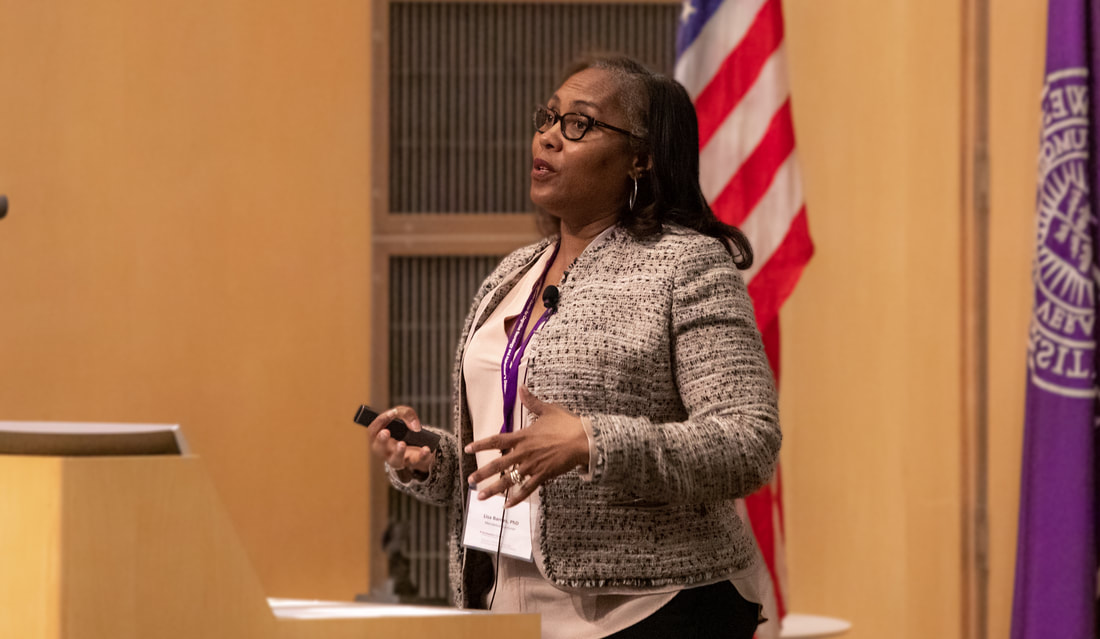
The keynote Mendelson Lecture was delivered by Lisa Barnes, PhD, professor of Neurological Sciences at Rush Medical College. Courtesy of Teresa Crawford Photo.
“Nobody had noticed this before — you can ask different questions when you include different people,” Barnes said.
Barnes also takes a broader view of risk factors, measuring associations between experiences such as racism, unfair treatment and childhood poverty to poor cognition later in life. “We have to think about policies that will help people mitigate some of this stress to create an equitable society for everyone, so everyone can age in the same way,” Barnes said. The scientific poster session showcased dozens of projects, with topics ranging from fundamental mechanisms of neurons to new modalities of speech therapy tailored for an increasingly online world. Nalini Rao, a student in the Northwestern University Interdepartmental Neuroscience program (NUIN), presented on research into dysfunction in synaptic vesicles, one of the earliest changes yet discovered in Alzheimer’s disease. Conducting her work in the laboratory of Jeffrey Savas, PhD, assistant professor in the Ken and Ruth Davee Department of Neurology‘s Division of Behavioral Neurology, Rao is exploring how lags in protein degradation may lead to buildup of toxic amyloid-beta protein aggregates. 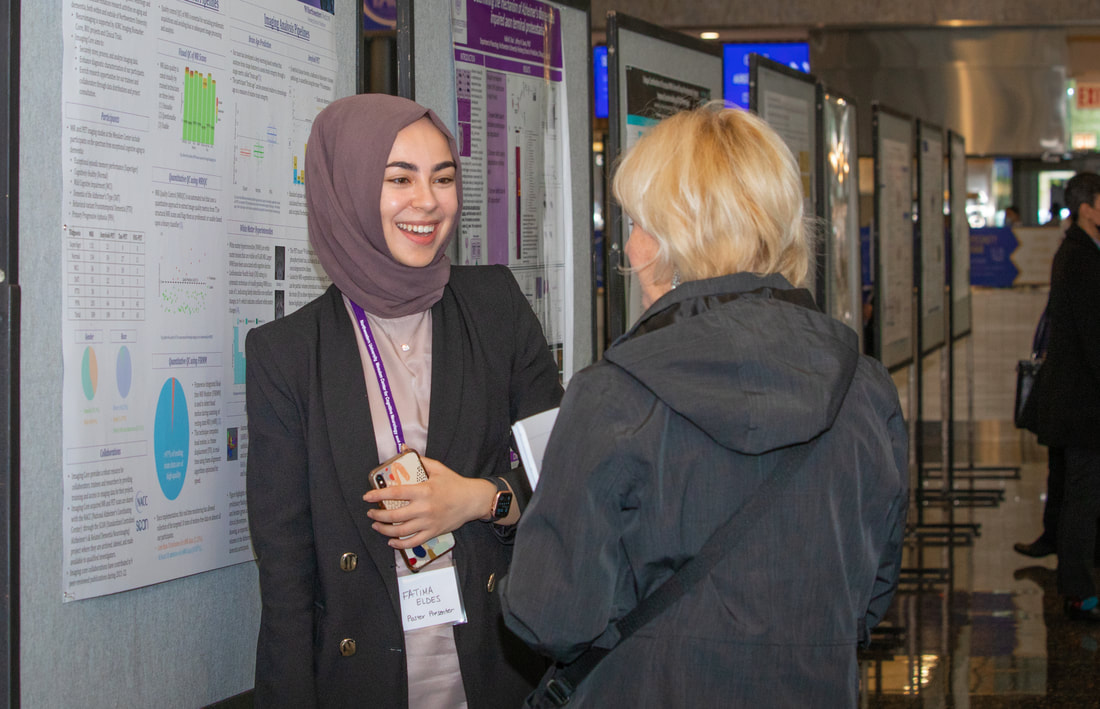
The scientific poster session showcased dozens of projects, with topics ranging from fundamental mechanisms of neurons to new modalities of speech therapy tailored for an increasingly online world. Courtesy of Teresa Crawford Photo.
“If we can fix this problem, can we avoid amyloid beta accumulation? That’s the question I’m asking,” Rao said.
John Disterhoft, PhD, the Ernest J. and Hattie H. Magerstadt Memorial Research Professor of Neuroscience, presented the Marie and Carl Duncan Prize for Memory Disorders, awarded for top-scoring scientific posters. Rachel Keszycki, a student in the Clinical Psychology PhD Program, and Allegra Kawles, research technologist, were awarded this year’s top prizes. Both conduct their research in the laboratory of Tamar Gefen, PhD, assistant professor of Psychiatry and Behavioral Sciences in the Division of Psychology. Alzheimer Day 2022 also marks 25 years of the Glen and Wendy Miller Family Buddy Program, which matches first-year medical students with patients diagnosed with early Alzheimer’s disease or related illnesses. Each year 10 to 15 medical students volunteer in the program and commit to spending at least four hours a month with their buddy, or mentor. Funded by The Glen and Wendy Miller Family Foundation, the goal of the program is to educate students about the disease outside of the clinic and give patients the opportunity to mentor students about daily issues they face. 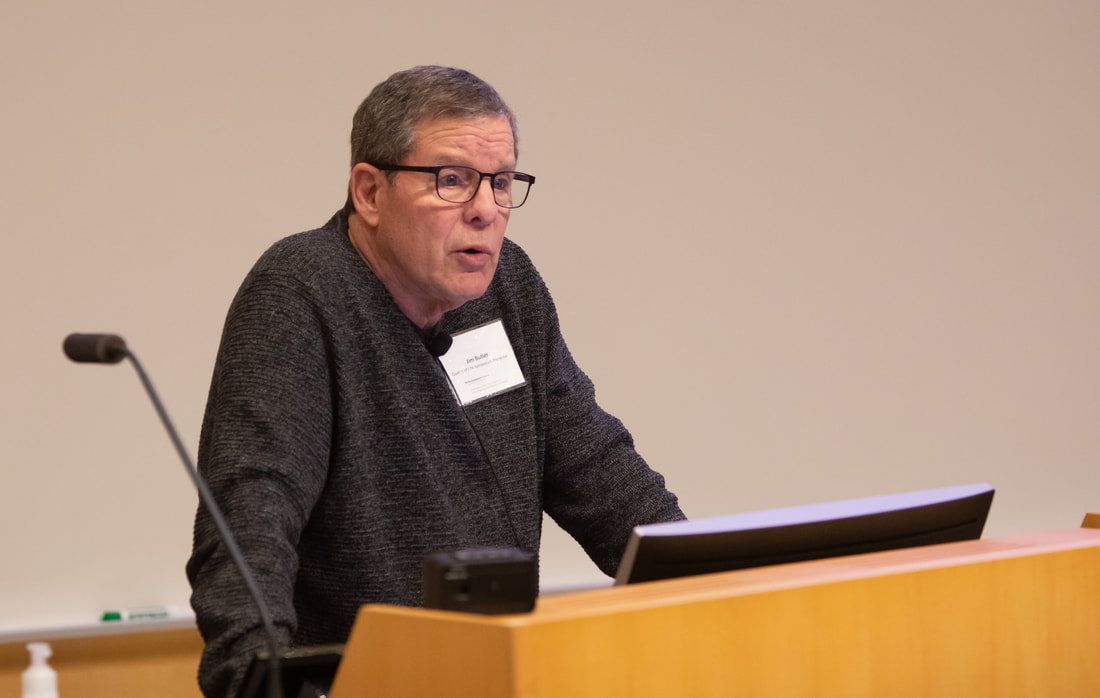
Jim Butler has participated in the Glen and Wendy Miller Family Buddy Program for four years, which matches first-year medical students with patients diagnosed with early Alzheimer’s disease or related illnesses. Courtesy of Teresa Crawford Photo.
Darby Morhardt, PhD, research professor at the Mesulam Center, of Preventive Medicine in the Division of Public Health Practice and director of the program, welcomed Jim Butler, a mentor who’s participated in the program for four years. Butler was joined by two of his mentees; Sebastian Otto-Meyer, now a resident in pediatrics at McGaw Medical Center and Brooke Gleason, a first-year medical student.
“The Buddy Program has brought me more joy than I ever would have imagined,” Butler said. “I want to thank Darby, and everyone involved with the program.” This article was originally published in the Feinberg School of Medicine News Center on May 9, 2022 .
|
Refer a PatientNorthwestern Medicine welcomes the opportunity to partner with you in caring for your patients.
|
You May Also Like
|

|
|