Picture

Northwestern Medicine
​Breakthroughs for Physicians

​​
  • Home
  • Specialties
    • Cardiovascular >
      • Research
      • Clinical Breakthroughs
      • News
    • Endocrinology >
      • Clinical Breakthroughs In Endocrinology
      • Research In Endocrinology
      • News
    • ENT (Otolaryngology) >
      • Clinical Breakthroughs
      • Research
      • News
    • Gastroenterology >
      • Clinical Breakthroughs
      • Research
      • News
    • Geriatrics >
      • Clinical Breakthroughs
      • Research
      • News
    • Neurosciences >
      • Rare and Complex Brain Tumors
      • Research
      • COVID-19 and Neurosciences
      • News
      • Clinical Breakthroughs
    • OB-GYN >
      • Clinical Breakthroughs
      • Research
      • News
    • Oncology >
      • Clinical Breakthroughs
      • Research
      • News
    • Ophthalmology >
      • Clinical Breakthroughs
      • Research
      • News
    • Organ Transplant >
      • Clinical Breakthroughs
      • Research
      • News
    • Orthopaedics >
      • Clinical Breakthroughs
      • Research
      • News
    • Psychiatry >
      • Clinical Breakthroughs
      • Research
      • News
    • Pulmonary >
      • Clinical Breakthroughs
      • Research
      • News
    • Rehabilitation >
      • Clinical Breakthroughs
      • News
    • Rheumatology >
      • Clinical Breakthroughs
      • Research
      • News
    • Urology >
      • Clinical Breakthroughs
      • Research
      • News
  • CME
  • REFERRALS
    • Refer to NM Cardiovascular
    • Refer to NM Neurosciences
    • Refer to Other Specialties

< BACK TO RESEARCH IN ENT

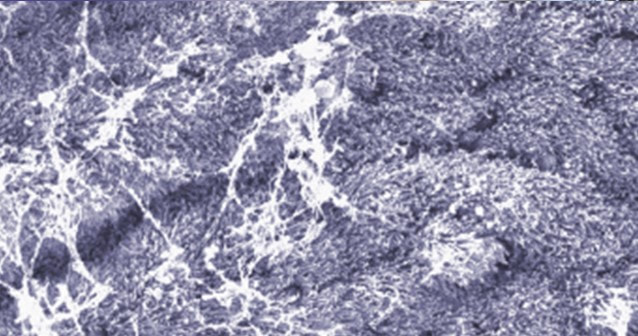
Microscopic image of cilia protein

July 2020

ENT

CRITICAL FUNCTION OF CILIA PROTEIN DISCOVERED

Featuring: Jing Zheng, PhD
​
​​Northwestern Medicine scientists have discovered that a specific protein is essential for proper cilia function, according to a study published in Proceedings of the National Academy of the Sciences.

The study found that calmodulin-regulated spectrin-associated protein3 — CAMSAP3 for short — is required to build some of the scaffolding on which cilia sit; deleting CAMSAP3 resulted in mucus buildup and airway blockages in mouse models.

“We realized the mice were coughing and sneezing,” said Jing Zheng, PhD, associate professor of Otolaryngology – Head and Neck Surgery, and co-senior author of the study. “Multiciliated cell defects can cause huge issues.”

Multiciliated cells (MCCs) are cells with small cilia on their surface that beat in a coordinated fashion to generate fluid flow or displace particles and pathogens. Most MCCs have hundreds of cilia and each cilium has microtubules arranged in a “9+2” formation; nine microtubule doublets in a circle with two microtubule singlets in the middle.

MCC dysfunction can cause embryo death, infertility, hearing loss and other issues. Consequently, the proteins that affect cilia are not well-studied because their necessity in basic biological functions can make it difficult to design experiments.

Initially interested in hearing, Zheng and her colleagues investigated the impact of deleting CAMSAP3 from mouse models, as the gene had been linked to hearing in previous studies.

“The hearing phenotype was inconsistent; some mice lost their hearing early and some later,” Zheng said.

What was more consistent, however, was the mucus buildup. After a technician noticed the mice sneezing, the investigators analyzed defective cilia in the nose and throat.
They found that many MCCs were missing microtubules — the scaffolding upon which the central two microtubule singlets reside, resulting in disorientation and unsynchronized cilia motion. In addition, in cells with normal CAMSAP3, the protein localized to the base of those microtubules, a good indicator for where its function is located within the cell, according to Zheng.

In the future, Zheng and her collaborators plan to examine the impact of CAMSAP3 in non-motile cilia, a different variety of ciliated cell that serve as sensory organs, including in the nose. While it’s a different type of ciliated cell, CASMAP3 could play a role here, too, according to Zheng.

“We want to test if CASMAP3 deletion will also negatively affect olfaction,” Zheng said.
Alan Robinson, PhD, research assistant professor of Otolaryngology and Head and Neck surgery, was the lead author of the study. Brian Mitchell, PhD, associate professor of Cell and Developmental Biology, was co-senior author of the study.

This study was funded by the Knowles Hearing Center and by National Institute on Deafness and Other Communication Disorders grants R56 DC011813, DC000089 and GM089970.

This article was originally published in the Feinberg School of Medicine News Center on July 8, 2020 . 
Jing Zheng, PhD headshot
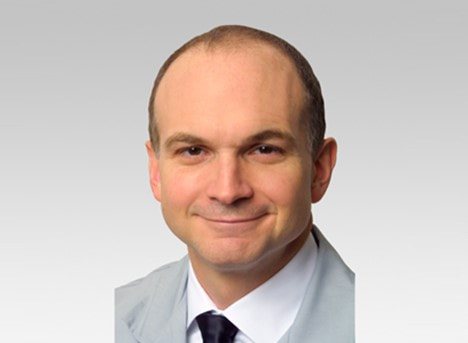
Jing Zheng, PhD, associate professor of Otolaryngology – Head and Neck Surgery, was the corresponding author of the study published in Proceedings of the National Academy of the Sciences

Refer a Patient

Northwestern Medicine welcomes the opportunity to partner with you in caring for your patients. ​
Call 844.344.6663
Find an NM otolaryngologist

You May Also Like

Robert C. Kern, MD headshot

November 2020

ENT
The Role of Biologic Therapies in the Treatment of Severe Rhinosinusitis
video still of Michael Awad, MD

November 2020

ENT
Upper Airway Stimulation for CPAP-Resistant Sleep Apnea
Sandeep Samant, MD headshot

January 2019

ENT
Advances in Treatment of Head and Neck Cancer

Northwestern Medicine Breakthroughs for Physicians

About Us     Terms of Use     Privacy Policy     How to Vote for U.S. News & World Report Best Hospitals
© 2026 Northwestern Medicine® and Northwestern Memorial HealthCare. 
Northwestern Medicine® is a trademark of Northwestern Memorial HealthCare, used by Northwestern University
Connect with us
[email protected]
International physicians, contact [email protected]
  • Home
  • Specialties
    • Cardiovascular >
      • Research
      • Clinical Breakthroughs
      • News
    • Endocrinology >
      • Clinical Breakthroughs In Endocrinology
      • Research In Endocrinology
      • News
    • ENT (Otolaryngology) >
      • Clinical Breakthroughs
      • Research
      • News
    • Gastroenterology >
      • Clinical Breakthroughs
      • Research
      • News
    • Geriatrics >
      • Clinical Breakthroughs
      • Research
      • News
    • Neurosciences >
      • Rare and Complex Brain Tumors
      • Research
      • COVID-19 and Neurosciences
      • News
      • Clinical Breakthroughs
    • OB-GYN >
      • Clinical Breakthroughs
      • Research
      • News
    • Oncology >
      • Clinical Breakthroughs
      • Research
      • News
    • Ophthalmology >
      • Clinical Breakthroughs
      • Research
      • News
    • Organ Transplant >
      • Clinical Breakthroughs
      • Research
      • News
    • Orthopaedics >
      • Clinical Breakthroughs
      • Research
      • News
    • Psychiatry >
      • Clinical Breakthroughs
      • Research
      • News
    • Pulmonary >
      • Clinical Breakthroughs
      • Research
      • News
    • Rehabilitation >
      • Clinical Breakthroughs
      • News
    • Rheumatology >
      • Clinical Breakthroughs
      • Research
      • News
    • Urology >
      • Clinical Breakthroughs
      • Research
      • News
  • CME
  • REFERRALS
    • Refer to NM Cardiovascular
    • Refer to NM Neurosciences
    • Refer to Other Specialties