Picture

Northwestern Medicine
​Breakthroughs for Physicians

​​
  • Home
  • Specialties
    • Cardiovascular >
      • Research
      • Clinical Breakthroughs
      • News
    • Endocrinology >
      • Clinical Breakthroughs In Endocrinology
      • Research In Endocrinology
      • News
    • ENT (Otolaryngology) >
      • Clinical Breakthroughs
      • Research
      • News
    • Gastroenterology >
      • Clinical Breakthroughs
      • Research
      • News
    • Geriatrics >
      • Clinical Breakthroughs
      • Research
      • News
    • Neurosciences >
      • Rare and Complex Brain Tumors
      • Research
      • COVID-19 and Neurosciences
      • News
      • Clinical Breakthroughs
    • OB-GYN >
      • Clinical Breakthroughs
      • Research
      • News
    • Oncology >
      • Clinical Breakthroughs
      • Research
      • News
    • Ophthalmology >
      • Clinical Breakthroughs
      • Research
      • News
    • Organ Transplant >
      • Clinical Breakthroughs
      • Research
      • News
    • Orthopaedics >
      • Clinical Breakthroughs
      • Research
      • News
    • Psychiatry >
      • Clinical Breakthroughs
      • Research
      • News
    • Pulmonary >
      • Clinical Breakthroughs
      • Research
      • News
    • Rehabilitation >
      • Clinical Breakthroughs
      • News
    • Rheumatology >
      • Clinical Breakthroughs
      • Research
      • News
    • Urology >
      • Clinical Breakthroughs
      • Research
      • News
  • CME
  • REFERRALS
    • Refer to NM Cardiovascular
    • Refer to NM Neurosciences
    • Refer to Other Specialties

< BACK TO RESEARCH IN ONCOLOGY

February 2024

UROLOGY

USING CANCER'S STRENGTH TO FIGHT AGAINST IT

Featuring: Jaehyuk Choi, MD, PhD

​​Northwestern Medicine scientists, along with collaborators from University of California, San Francisco (UCSF), may have found a way around the limitations of engineered T-cells by borrowing a few tricks from cancer itself, in findings published in Nature.

By studying mutations in malignant T-cells that cause lymphoma, they zeroed in on one that significantly enhanced the potency of engineered T-cells. Inserting a gene encoding this unique mutation into normal human T-cells made them more than 100 times more effective at killing cancer cells without any signs of becoming toxic.

While current immunotherapies only work against cancers of the blood and bone marrow, the T-cells engineered by Northwestern Medicine and UCSF killed tumors derived from skin, lung and stomach in mice. The team has already begun working toward testing this new approach in people.

“We used nature’s roadmap to make better T-cell therapies,” says Jaehyuk Choi, MD, PhD, associate professor of Medical Dermatology and of Biochemistry and Molecular Genetics at Northwestern Medicine. “The superpower that makes cancer cells so strong can be transferred into T-cell therapies to make them powerful enough to eliminate what were once incurable cancers.”

“Mutations underlying the resilience and adaptability of cancer cells can super-charge T-cells to survive and thrive in the harsh conditions that tumors create,” explains Kole Roybal, PhD, associate professor of Microbiology and Immunology at UCSF and center director for the Parker Institute for Cancer Immunotherapy Center at UCSF.

A solution hiding in plain sight
Creating effective immunotherapies has proven difficult against most cancers because the tumor creates an environment focused on sustaining itself, redirecting resources like oxygen and nutrients for its own benefit. Often, tumors hijack the body’s immune system, causing it to defend the cancer, instead of attacking it.
Not only does this impair the ability of regular T-cells to target cancer cells, it undermines the effectiveness of the engineered T-cells that are used in immunotherapies, which quickly tire against the tumor’s defenses.

“For cell-based treatments to work under these conditions,” Roybal said, “we need to give healthy T-cells abilities that are beyond what they can naturally achieve.”​​​
Picture
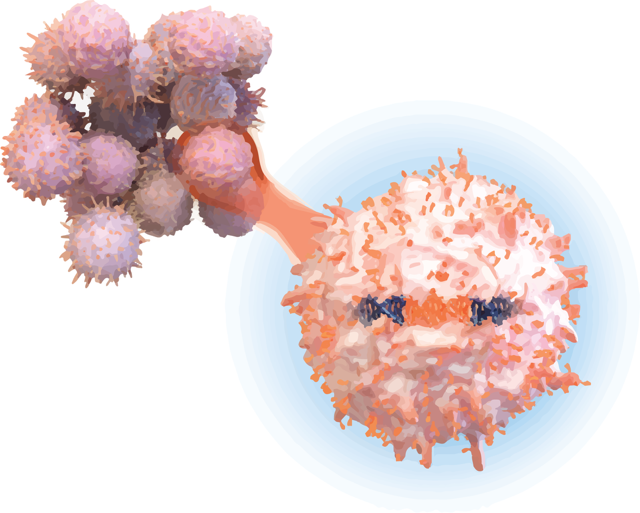
The Choi and Roybal labs have jointly engineered a novel therapy for solid tumors. It borrows a superpower from T-cell cancers to make T-cell therapies strong enough to fight skin, lung and stomach cancers. (Courtesy of Moonlight Bio)
A potential breakthrough treatment in the making
The Northwestern and UCSF teams screened 71 mutations found in patients with T-cell lymphoma, and they identified which ones could enhance engineered T-cell therapies in mouse tumor models. Eventually, they isolated one that proved both potent and non-toxic, subjecting it to a rigorous set of safety tests.

“Our discoveries empower T-cells to kill multiple cancer types,” says Dr. Choi, also a member of Robert H. Lurie Comprehensive Cancer Center of Northwestern University. “This approach performs better than anything we’ve seen before.” Their discoveries can be incorporated into treatments for many types of cancer, the scientists said. 

“T-cells have the potential to offer cures to people who are heavily pretreated and have a poor prognosis,” Dr. Choi explains. “Cell therapies are living drugs, because they live and grow inside the patient and can provide long-term immunity against cancer.”

In collaboration with the Parker Institute for Cancer Immunotherapy and Venrock, Roybal and Dr. Choi are building a new company, Moonlight Bio, to realize the potential of their groundbreaking approach. They are currently developing a cancer therapy that they hope to begin testing in people within the next few years.

“We see this as the starting point,” Roybal says. “There’s so much to learn from nature about how we can enhance these cells and tailor them to different types of diseases.”

​This article was originally published in the Northwestern University Feinberg School of Medicine News Center on February 7, 2024. ​
Listen to a podcast episode and claim your CME
Daniela Matei, MD headshot
 Jaehyuk Choi, MD, PhD, associate professor of Dermatology and of Biochemistry and Molecular Genetics, was senior author of the study published in Nature.

Refer a Patient

Northwestern Medicine welcomes the opportunity to partner with you in caring for your patients. ​
Call 312.695.8146
Find an NM Oncologist

You May Also Like

Dr Krambeck in OR

December 2022

ONCOLOGY
Bin Zhang, MD, PHD, Named Co-leader Of Tumor Environment And Metastasis Program
Dr Meeks with patient

September 2022

ONCOLOGY
NIH Initiative To Systematically Investigate And Establish Function Of Every Human Gene
Physicians looking at a computer screen

October 2022

ONCOLOGY
Newly Identified Protein Drives Breast Cancer Stemness And Metastasis

Northwestern Medicine Breakthroughs for Physicians

About Us     Terms of Use     Privacy Policy     How to Vote for U.S. News & World Report Best Hospitals
© 2025 Northwestern Medicine® and Northwestern Memorial HealthCare. 
Northwestern Medicine® is a trademark of Northwestern Memorial HealthCare, used by Northwestern University
Connect with us
[email protected]
International physicians, contact [email protected]
  • Home
  • Specialties
    • Cardiovascular >
      • Research
      • Clinical Breakthroughs
      • News
    • Endocrinology >
      • Clinical Breakthroughs In Endocrinology
      • Research In Endocrinology
      • News
    • ENT (Otolaryngology) >
      • Clinical Breakthroughs
      • Research
      • News
    • Gastroenterology >
      • Clinical Breakthroughs
      • Research
      • News
    • Geriatrics >
      • Clinical Breakthroughs
      • Research
      • News
    • Neurosciences >
      • Rare and Complex Brain Tumors
      • Research
      • COVID-19 and Neurosciences
      • News
      • Clinical Breakthroughs
    • OB-GYN >
      • Clinical Breakthroughs
      • Research
      • News
    • Oncology >
      • Clinical Breakthroughs
      • Research
      • News
    • Ophthalmology >
      • Clinical Breakthroughs
      • Research
      • News
    • Organ Transplant >
      • Clinical Breakthroughs
      • Research
      • News
    • Orthopaedics >
      • Clinical Breakthroughs
      • Research
      • News
    • Psychiatry >
      • Clinical Breakthroughs
      • Research
      • News
    • Pulmonary >
      • Clinical Breakthroughs
      • Research
      • News
    • Rehabilitation >
      • Clinical Breakthroughs
      • News
    • Rheumatology >
      • Clinical Breakthroughs
      • Research
      • News
    • Urology >
      • Clinical Breakthroughs
      • Research
      • News
  • CME
  • REFERRALS
    • Refer to NM Cardiovascular
    • Refer to NM Neurosciences
    • Refer to Other Specialties