

|
December 2020 NEW DRUG CONNECTS DOTS THAT CAUSE CLOTS IN COVID-19 PATIENTSFeaturing: Douglas Vaughan, MD
Episode SummaryApproach inspired by a gene mutation in Indiana Swiss Amish that reduces clottingA gene mutation discovered in a small Amish community in Indiana has inspired the use of a new experimental drug for COVID-19 that reduces blood clotting, which is a primary driver of morbidity and organ damage in the disease.
The first clinical trial of the drug in COVID-19 patients has just been launched at Northwestern Medicine. “This provides a whole new approach of thinking about how to reduce the severity of illness in patients with COVID — largely through the potential impact on clotting,” said lead investigator Douglas Vaughan, MD, chair and Irving S. Cutter Professor of Medicine . “Until now, no one has pulled together a drug target that captures the constellation of factors that put people at high risk for bad outcomes.” The new experimental drug reduces the activity of a protein called PAI-1 in the blood. High PAI-1 levels alone are enough to cause clotting in arteries that supply blood to the heart and the lungs in experimental models. Lower levels of PAI-1 reduce clotting, a primary driver of damage to the lungs, heart, kidneys and brain, as well as overall mortality in patients hospitalized with COVID-19. The leading clinical risk factors for poor outcomes in patients with COVID-19 — age, obesity, diabetes, hypertension — are all associated with increased blood levels of PAI-1 and together have an additive effect in increasing PAI-1. In fact, one of the most powerful clinical predictors of severity of illness in COVID-19 is obesity, which is also the most important determinant of blood PAI-1 levels in adults.” Vaughan and colleagues at Northwestern have measured blood PAI-1 levels in over 30 patients hospitalized with COVID. “The PAI-1 levels in the COVID-19 patients tested so far are 10 times higher than normal,” Vaughan said. “Nearly 30% of these patients have levels higher than we have ever seen in adults, far beyond levels measured in thousands of non-COVID patients over the last 25 years. This alone could drive the clotting problem and needs to be addressed.” The drug, TM5614, is in tablet form and will be tested in 80 high-risk patients hospitalized with COVID in a phase two clinical trial. In 2017, Vaughan and colleagues published a study reporting a community of Swiss Amish in Indiana had a mutation in the gene that codes for the protein PAI-1, so they produced less of it. This reduction in PAI-1 appears to protect against biological aging in a variety of ways. “We now know that age is the most important risk factor in patients with COVID-19,” Vaughan said. “Knowing the relationship of PAI-1 to aging itself is another emerging connection as to how PAI-1 might impact on the severity of illness.” The drug is now being developed to potentially prevent a variety of aging-related diseases based on research findings from the Vaughan laboratory. Vaughan is the leading physician-scientist in the world in the study of PAI-1, and his research has almost exclusively focused on PAI-1 for more than 30 years. He showed years ago that excess PAI-1 alone will make animals have heart attacks by causing clotting in the coronary arteries. It turns out PAI-1 is a unique factor that impairs the function of all three internal systems that protect us from clotting. The drug TM5614 was originally developed in Japan based on the idea that inhibition of PAI-1 might be useful in slowing the progression of kidney disease in patients with diabetes. Based on work done in Vaughan’s laboratory at Northwestern and in others around the world, evidence shows that PAI-1 contributes to a number of different metabolic, cardiovascular, fibrotic and aging-related disorders. |
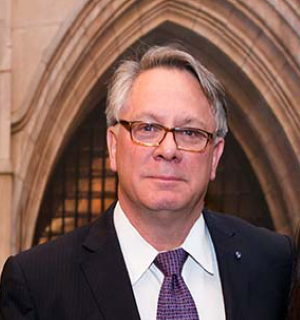
Douglas Vaughan, MD, chair and Irving S. Cutter Professor of Medicine, is the lead investigator on the trial.
Refer a PatientNorthwestern Medicine welcomes the opportunity to partner with you in caring for your patients.
|
You May Also Like
December 2020 |
|
|