

|
September 2022 FIRST DRUG TO REDUCE RISK OF MORTALITY AND HOSPITALIZATION IN HEART FAILUREFeaturing: Sanjiv Shah, ’00 MD
The drug dapagliflozin, a sodium-glucose cotransporter 2 (SGLT2) inhibitor, reduced the risk of cardiovascular-related mortality and hospitalizations in patients with heart failure, regardless of ejection fraction, according to a series of clinical trial reports published in Nature Medicine, The New England Journal of Medicine (NEJM), The Lancet and Circulation. “Since establishing the world’s first heart failure with preserved ejection fraction program at Northwestern 15 years ago, we have been searching extensively for a treatment that improves symptoms and exercise tolerance, reduces heart failure hospitalizations and lowers cardiovascular mortality. We have finally achieved that goal with SGLT2 inhibitors, which is a major advance for our patients and proves that HFpEF is indeed a treatable medical condition,” said Sanjiv Shah, ’00 MD, the Neil J. Stone, MD, Professor and director of the Center for Deep Phenotyping and Precision Therapeutics at the Institute for Augmented Intelligence in Medicine, who was a co-author of the studies. SGLT2 inhibitors, which promote glucose, sodium and water excretion from the kidneys, are used to treat patients with diabetes as well as heart failure with reduced ejection fraction (HFrEF), a condition in which the heart’s left ventricle doesn’t pump enough blood to the rest of the body and the ejection fraction is less than 40 percent. However, the clinical benefits of SGLT2 inhibitors for patients with higher ejection fractions — particularly those with ejection fraction greater than 60 percent— had remained less well known. In a trial published in The Lancet, a team of investigators performed a meta-analysis of two large-scale heart failure clinical trials — DELIVER, which was published in NEJM, and EMPEROR-Preserved — which included patients with mildly reduced or preserved ejection fraction who received dapagliflozin or placebo. Shah is an executive committee member for the DELIVER trial, the largest-ever randomized clinical trial in heart failure with preserved ejection fraction (HFpEF) to date. This analysis also included trials that enrolled patients with reduced ejection fraction (DAPA-HF and EMPEROR-Reduced) and hospitalized patients with worsening heart failure, irrespective of ejection fraction (SOLOIST-WHF). Overall, the authors found that dapagliflozin reduced the risk of mortality and hospitalizations for heart failure in a wide range of patients with heart failure across the spectrum of ejection fraction. These findings were also replicated in a study published in Nature Medicine, in which investigators examined patient outcomes from two clinical trials (DAPA-HF and DELIVER), both of which enrolled participants with heart failure and different ranges of left ventricular ejection fraction. Additionally, a study published in Circulation examined the efficacy and tolerability of dapagliflozin in relation to frailty in patients enrolled in the DELIVER trial who had mildly reduced and preserved ejection fraction. This study found that dapagliflozin improved health-related quality of life earlier and to a greater extent in patients who were more frail compared to those who were less frail. Last year, Northwestern investigators were part of a team who published a randomized clinical trial which demonstrated that dapagliflozin improved symptoms, quality of life and exercise capacity in patients with HFpEF, further solidifying the beneficial effects of SGLT2 inhibitors in HFpEF. “Despite SGLT2 inhibitors, patients with HFpEF are still symptomatic and are at risk for adverse outcomes. We continue to push the envelope with our large group of investigators engaged in HFpEF at Northwestern by leading cutting edge observational studies and clinical trials, with the hope of continuing to improve the lives of our patients,” Shah said. The DAPA-HF and DELIVER trials were supported by AstraZeneca. This article was originally published in the Feinberg School of Medicine News Center on September 30, 2022. |
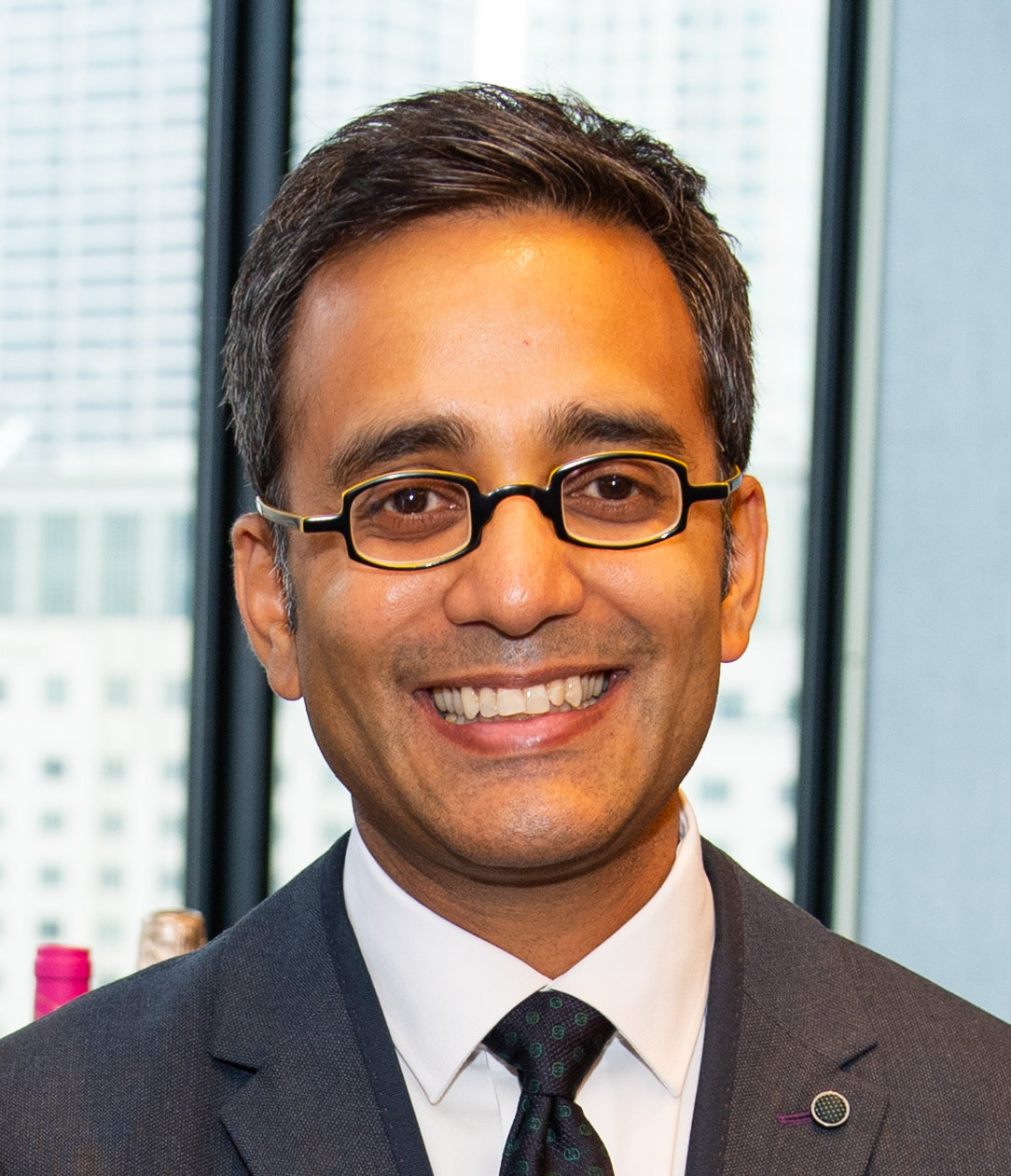
Sanjiv Shah, ’00 MD, the Neil J. Stone, MD, Professor and director of the Center for Deep Phenotyping and Precision Therapeutics at the Institute for Augmented Intelligence in Medicine, was a co-author of the clinical trial reports published in Nature Medicine, The New England Journal of Medicine, The Lancet and Circulation.
Refer a PatientNorthwestern Medicine welcomes the opportunity to collaborate with you in caring for your patients.
|
You May Also Like

December 2021 |

December 2021 |

November 2021 |