Picture

Northwestern Medicine
​Breakthroughs for Physicians

​​
  • Home
  • Specialties
    • Cardiovascular >
      • Research
      • Clinical Breakthroughs
      • News
    • Endocrinology >
      • Clinical Breakthroughs In Endocrinology
      • Research In Endocrinology
      • News
    • ENT (Otolaryngology) >
      • Clinical Breakthroughs
      • Research
      • News
    • Gastroenterology >
      • Clinical Breakthroughs
      • Research
      • News
    • Geriatrics >
      • Clinical Breakthroughs
      • Research
      • News
    • Neurosciences >
      • Rare and Complex Brain Tumors
      • Research
      • COVID-19 and Neurosciences
      • News
      • Clinical Breakthroughs
    • OB-GYN >
      • Clinical Breakthroughs
      • Research
      • News
    • Oncology >
      • Clinical Breakthroughs
      • Research
      • News
    • Ophthalmology >
      • Clinical Breakthroughs
      • Research
      • News
    • Organ Transplant >
      • Clinical Breakthroughs
      • Research
      • News
    • Orthopaedics >
      • Clinical Breakthroughs
      • Research
      • News
    • Psychiatry >
      • Clinical Breakthroughs
      • Research
      • News
    • Pulmonary >
      • Clinical Breakthroughs
      • Research
      • News
    • Rehabilitation >
      • Clinical Breakthroughs
      • News
    • Rheumatology >
      • Clinical Breakthroughs
      • Research
      • News
    • Urology >
      • Clinical Breakthroughs
      • Research
      • News
  • CME
  • REFERRALS
    • Refer to NM Cardiovascular
    • Refer to NM Neurosciences
    • Refer to Other Specialties

< BACK TO RESEARCH IN ONCOLOGY

April 2021

ONCOLOGY

DRUG DEMONSTRATES POOR EFFICACY IN ADVANCED BLADDER CANCER

Featuring: Maha Hussain, MBChB
​
​​An FDA-approved monoclonal antibody drug used to treat advanced bladder cancer demonstrated poor efficacy in a recent clinical trial published in The Lancet Oncology.
Muscle invasive urothelial carcinoma (MIUC), the most common type of bladder cancer, is characterized by cancerous urothelial cells that line the inside of the bladder and urinary tract wall. The cancer is aggressive and can spread despite the use of available treatments.

The current standard of care for patients with MIUC is a combination of surgery and cisplatin-based neoadjuvant chemotherapy. However, almost half of patients are ineligible for this treatment due to inherent frailty, comorbidities or impaired kidney function. Coupled with the cancer’s high recurrence rate, developing novel therapies for this patient population continues to remain high priority.

​“Despite progress to date, MIUC continues be a high-risk disease despite curative intent therapy. It’s therefore very critical to continue to investigate new agents and combination therapy to further enhance the chance for a cure,” said Maha Hussain, MBChB, the Genevieve E. Teuton Professor of Medicine in the Division of Hematology and Oncology, and a study steering committee member and co-author of the clinical trial.

For the current clinical trial, Hussain and collaborators evaluated the efficacy of atezolizumab, a monoclonal antibody cancer drug approved by the Food and Drug Administration, in treating patients with advanced MIUC.

“The safety profile for atezolizumab was consistent with that observed in prior studies in the advanced setting, with no new safety concerns,” said Hussain, who is also a member of the Robert H. Lurie Comprehensive Cancer Center of Northwestern University.

Investigators enrolled 800 adult patients with MIUC from 24 different countries who had surgery, either a radical cystectomy or a nephroureterectomy with lymph node dissection.

Patients were then randomized to receive 1,200 milligrams of atezolizumab intravenously every three weeks for one year or be kept under observation without additional treatment after surgery.

Overall, the atezolizumab group did not show significant improvement in disease-free survival compared to the observation group — average disease-free survival was 19.4 months for the atezolizumab group compared to 16.6 months for the observation group.

Additionally, serious adverse events occurred in 31 percent of patients who received atezolizumab compared to 18 percent of patients in the observation group.

“Atezolizumab was generally tolerable, with no new safety signals; however, higher frequencies of adverse events leading to discontinuation were reported than in metastatic urothelial carcinoma studies. These data do not support the use of atezolizumab in the setting evaluated in IMvigor010 at this time,” the authors wrote.

This work was supported by F Hoffmann-La Roche/Genentech.
​
This article was originally published in the Feinberg School of Medicine News Center on April 29, 2021.
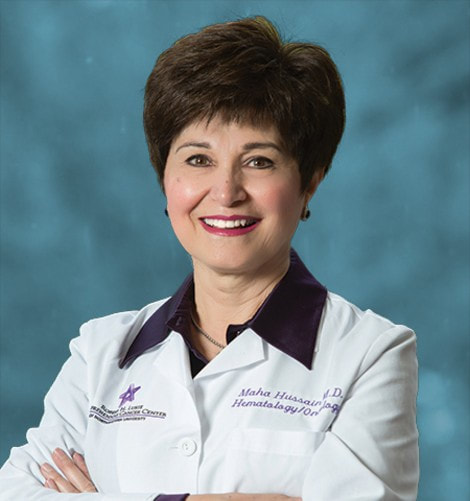
Maha Hussain, MBChB headshot
Maha Hussain, MBChB, the Genevieve E. Teuton Professor of Medicine in the Division of Hematology and Oncology, was a study steering committee member and co-author of the clinical trial published in The Lancet Oncology.

Refer a Patient

Northwestern Medicine welcomes the opportunity to partner with you in caring for your patients. ​
Call 844.344.6663
Find an NM ONCOLOGIST

You May Also Like

B-Cell Illustration

February 2021

ONCOLOGY
Identifying Therapeutic Targets for B-cell Acute Lymphoblastic Leukemia
Epigenetic Markers Illustration

December 2020

ONCOLOGY
Identifying Oncogenes through Epigenetic Markers
Zebrafish Swimming

December 2020

ONCOLOGY
Scientists Unravel Zebrafish Epigenome

Northwestern Medicine Breakthroughs for Physicians

About Us     Terms of Use     Privacy Policy     How to Vote for U.S. News & World Report Best Hospitals
© 2025 Northwestern Medicine® and Northwestern Memorial HealthCare. 
Northwestern Medicine® is a trademark of Northwestern Memorial HealthCare, used by Northwestern University
Connect with us
[email protected]
International physicians, contact [email protected]
  • Home
  • Specialties
    • Cardiovascular >
      • Research
      • Clinical Breakthroughs
      • News
    • Endocrinology >
      • Clinical Breakthroughs In Endocrinology
      • Research In Endocrinology
      • News
    • ENT (Otolaryngology) >
      • Clinical Breakthroughs
      • Research
      • News
    • Gastroenterology >
      • Clinical Breakthroughs
      • Research
      • News
    • Geriatrics >
      • Clinical Breakthroughs
      • Research
      • News
    • Neurosciences >
      • Rare and Complex Brain Tumors
      • Research
      • COVID-19 and Neurosciences
      • News
      • Clinical Breakthroughs
    • OB-GYN >
      • Clinical Breakthroughs
      • Research
      • News
    • Oncology >
      • Clinical Breakthroughs
      • Research
      • News
    • Ophthalmology >
      • Clinical Breakthroughs
      • Research
      • News
    • Organ Transplant >
      • Clinical Breakthroughs
      • Research
      • News
    • Orthopaedics >
      • Clinical Breakthroughs
      • Research
      • News
    • Psychiatry >
      • Clinical Breakthroughs
      • Research
      • News
    • Pulmonary >
      • Clinical Breakthroughs
      • Research
      • News
    • Rehabilitation >
      • Clinical Breakthroughs
      • News
    • Rheumatology >
      • Clinical Breakthroughs
      • Research
      • News
    • Urology >
      • Clinical Breakthroughs
      • Research
      • News
  • CME
  • REFERRALS
    • Refer to NM Cardiovascular
    • Refer to NM Neurosciences
    • Refer to Other Specialties